Showing posts with label Friday Thrift. Show all posts

Tuesday, April 8, 2025

Friday Thrift: Why Shopping Second-Hand and Vintage Through 'Tariff Hell' Makes Strategic Sense


Why Shopping Second-Hand and Vintage Through 'Tariff Hell' Makes Sense

In a world of rising costs, supply chain disruptions, and environmental concerns, second-hand and vintage shopping isn't just a quirky lifestyle—it’s a smart, sustainable rebellion against the modern retail machine. Especially when navigating the high prices and import duties of what many call "tariff hell."

Escape the Global Retail Markup Game

Global shipping delays, tariffs, and trade restrictions have made brand-new goods more expensive than ever. When you buy second-hand or vintage—especially locally or peer-to-peer—you bypass the import-tax trap entirely. No surprise duty fees, no long waits, no inflated costs from overseas vendors.

Better Quality, Less Guilt

Many vintage pieces were built to last—before fast fashion and planned obsolescence took over. Whether it's a wool coat from the 1960s or a mid-century teak chair, these items were made with craftsmanship, not mass production shortcuts. You get quality without supporting a throwaway culture.

Sustainable, Circular, and Conscious

Second-hand shopping is a powerful antidote to overconsumption. It keeps items out of landfills, reduces demand for new production, and supports a circular economy. Choosing used over new is one of the easiest ways to lower your carbon footprint.

Stand Out With Soul

Vintage and thrifted finds have stories, patina, character—something mass-market goods often lack. Your style becomes more authentic, more personal, and often more affordable than chasing trends at full price.

Tariff-Free Treasure Hunting

When global shopping feels like a minefield of surprise fees and delays, second-hand becomes a kind of freedom. Local thrift stores, vintage markets, and online resellers offer instant gratification and zero customs chaos.

Final Thought

Shopping second-hand and vintage isn’t just nostalgic—it’s strategic. In the face of “tariff hell,” it’s a clever way to reclaim autonomy, reduce waste, and invest in goods that have already stood the test of time.


COPYRIGHT 2007-2025 Patti Friday b.1959.

Wednesday, August 21, 2024

Tabletop Decor


Tabletop items generally refer to objects that are commonly placed on tables for various purposes, including dining, decoration, or utility. Here are some categories of tabletop items:

1. Dining and Serving Items:
   - Plates, Bowls, and Dishes: Dinner plates, salad plates, soup bowls, serving platters.
   - Glassware: Drinking glasses, wine glasses, champagne flutes.
   - Cutlery: Knives, forks, spoons, serving utensils.
   - Serving Pieces: Trays, pitchers, bread baskets.
   - Napkins and Napkin Rings: Cloth or paper napkins, napkin rings.
   - Salt and Pepper Shakers: Salt, pepper, and other seasoning containers.
   - Condiment Holders: Ketchup, mustard, butter dishes, etc.


 2. Decorative Items:
   - Centerpieces: Floral arrangements, candles, sculptures.
   - Vases: Holding flowers or decorative branches.
   - Tablecloths and Runners: Cloths or runners to cover and decorate the table.
   - Coasters: Protect surfaces from drink condensation.
   - Candle Holders and Lanterns: For mood lighting and decoration.


3. Practical and Utility Items:
   - Trivets: Heat-resistant mats or stands for hot dishes.
   - Place Mats: Individual mats for each person's setting.
   - Table Lamps: Small lamps for lighting.
   - Books or Magazines: For casual reading, often found on coffee tables.
   - Organizers: For remote controls, pens, or small items on side tables.


4. Entertainment Items:
   - Board Games: Chess, checkers, or other games.
   - Cards and Dice: For card games or other tabletop games.
   - Puzzles: For leisure activities on a table.


These items help set the atmosphere, serve practical purposes, and enhance the overall aesthetic of the space.

COPYRIGHT 2007-2024 Patti Friday b.1959.

Wednesday, July 17, 2024

6 Ways Thrifting Benefits Society


Thrifting, or shopping at second-hand stores, offers several benefits to society:

1. Environmental Benefits: Thrifting reduces the demand for new goods, which helps decrease the environmental impact of manufacturing, packaging, and transporting new products. It promotes a circular economy by extending the life cycle of items.

2. Reduction of Waste: By reusing and repurposing items, thrifting reduces the amount of waste that ends up in landfills. This is particularly important for reducing textile waste, which is a significant environmental issue globally.

3. Support for Charitable Causes: Many thrift stores are operated by charitable organizations or support community programs. Shopping at these stores helps fund their initiatives, ranging from supporting local communities to funding research and advocacy efforts.

4. Affordable Shopping: Thrift stores offer affordable options for clothing, furniture, household items, and more. This can help individuals and families save money while still obtaining quality goods.

5. Promotion of Creativity and Individual Style: Thrifting encourages creativity in fashion and home decor by offering unique, one-of-a-kind items that are not typically found in mainstream retail stores. It allows people to express their individuality and style preferences in distinct ways.

6. Local Economy Support: Thrift stores often contribute to the local economy by providing jobs and generating income that stays within the community.

Overall, thrifting promotes sustainability, supports charitable causes, and provides economic and creative benefits to individuals and society as a whole.

COPYRIGHT 2007-2024 Patti Friday b.1959.

Sunday, June 30, 2024

What Does a Culinary Producer Do on a Film Set?


In one of my recent posts I shared all the positions (team members) inside a restaurant business. I was inspired to publish that post by The Bear.  You can read that post here. 
I promised to do a separate post about the role of a Culinary Producer. Courtney Stouer and Matty Matheson both set the stage for food on The Bear. 

Listen to Courtney on the Cherry Bombe Podcast here.


"Matheson worked with Courtney Storer (above - who goes by Coco), the sister of show creator Christopher Storer, and the culinary producer on the show, using his experience as a longtime chef to help bring accuracy and delectability to “The Bear’s” storyline." - Variety 


Culinary Producer on a Film Set

Responsibilities

1. Menu Planning and Recipe Development:
   - Develop and plan menus for scenes that involve food, ensuring they align with the script, director’s vision, and period accuracy.
   - Create and test recipes to ensure they look visually appealing on camera and are feasible for the scene.

2. Food Styling:
   - Style food for on-camera appearances, making sure it looks appetizing and matches the narrative requirements.
   - Work with props and set designers to create realistic food presentations.

3. Collaboration with Departments:
   - Collaborate closely with the director, production designer, and art department to ensure food-related scenes are seamlessly integrated into the film’s aesthetic.
   - Coordinate with the costume department to ensure food matches the era, culture, and setting of the film.

4. On-Set Food Preparation:
   - Prepare food on set for filming, often working in tight timeframes and under varying conditions.
   - Maintain multiple versions of dishes for continuity purposes, including hero dishes (main focus) and backup dishes.

5. Food Safety and Hygiene:
   - Ensure all food preparation and handling follow strict safety and hygiene standards to avoid any health hazards.
   - Educate and enforce food safety practices among cast and crew involved in food scenes.

6. Budget Management:
   - Manage the culinary budget, including costs for ingredients, kitchen equipment, and any additional culinary staff.
   - Source and purchase ingredients, balancing quality with cost-effectiveness.

7. Scene Authenticity and Accuracy:
   - Research and ensure authenticity of food, cooking techniques, and culinary traditions relevant to the film’s setting and time period.
   - Provide expertise on culinary details to enhance the film's realism.

8. Problem Solving:
   - Quickly address any food-related issues that arise on set, such as unexpected weather conditions affecting food quality or last-minute script changes.
   - Adapt and find creative solutions to ensure food scenes are executed smoothly.

9. Training and Supervision:
   - Train actors on proper handling and consumption of food during scenes to maintain continuity and safety.
   - Supervise additional culinary staff, including food stylists, assistants, and kitchen staff.

10. Documentation and Continuity:
    - Document all culinary elements for continuity, ensuring consistency in food appearance and placement across multiple takes and scenes.
    - Keep detailed notes and photographs of food setups to maintain visual consistency throughout the film.


Skills and Qualifications:
- Culinary Expertise: Professional culinary training and extensive experience in cooking and food styling.
- Creativity and Aesthetic Sense: Strong visual and creative skills to make food look appealing on camera.
- Knowledge of Film Production: Understanding of the filmmaking process and the ability to work effectively on a film set.
- Attention to Detail: Keen attention to detail to ensure accuracy and authenticity in food presentation.
- Time Management: Ability to work efficiently under tight deadlines and manage multiple tasks simultaneously.
- Communication Skills: Strong communication and collaboration skills to work with various departments and personnel.
- Problem-Solving: Quick thinking and adaptability to address and resolve any food-related issues that arise on set.
- Budget Management: Experience in managing budgets and making cost-effective decisions regarding ingredients and resources.
- Food Safety Certification: Knowledge of and certification in food safety and hygiene standards.

This job description outlines the diverse responsibilities and skills required for a culinary producer on a film set, emphasizing their role in creating authentic and visually appealing food scenes that enhance the overall storytelling.

COPYRIGHT 2007-2024 Patti Friday b.1959.

Monday, May 27, 2024

6 Things A Prop Stylist Does


A Prop Stylist is a creative professional responsible for sourcing, arranging, and styling props for various visual media projects, such as photo shoots, film sets, commercials, and events. The role requires a keen eye for detail, a deep understanding of visual aesthetics, and the ability to enhance the narrative or branding of a project through the strategic use of props.

Here are 6 Things Prop Stylists Do:

1. Concept Development:
   - Collaborate with clients, directors, photographers, and other creative professionals to understand the project’s vision and requirements.
   - Develop mood boards, sketches, and style guides to communicate the visual direction and concept.

2. Sourcing and Selection:
   - Research and source appropriate props, furniture, botanicals and decor items from various suppliers, vintage stores, prop houses, or custom-made options.
   - Ensure all props align with the project’s aesthetic, theme, and budget.

3. Preparation and Organization:
   - Prepare and organize props before shoots or events, including cleaning, repairing, or customizing items as needed.
   - Maintain an inventory of props and ensure their safe transport to and from locations.

4. On-Set Styling:
   - Arrange and style props on set to create visually appealing and cohesive scenes.
   - Work closely with photographers, videographers, and directors to adjust props and styling according to feedback.

5. Problem-Solving:
   - Quickly address and resolve any issues or last-minute changes related to props during shoots or events.
   - Adapt to different styles and requirements for various projects, demonstrating flexibility and creativity.

6. Post-Production:
   - Oversee the proper packing and return of rented or borrowed props.
   - Manage the storage and organization of owned props for future use.

Required Skills and Qualifications:
- Creativity and Artistic Sensibility: Strong aesthetic sense and the ability to visualize and execute creative concepts.
- Attention to Detail: Meticulous in arranging and styling props to achieve the desired visual impact.
- Project Management: Efficiently manage multiple projects, deadlines, and budgets.
- Communication: Excellent verbal and written communication skills for collaborating with various stakeholders.
- Problem-Solving: Ability to think on your feet and come up with creative solutions to styling challenges.
- Physical Stamina: Ability to handle physical tasks such as lifting, moving, and setting up props.

Education and Experience:
- Education: A background in art, design, fashion, interior design, or a related field is preferred but not mandatory.
- Experience: Prior experience in prop styling, set design, interior styling, or related fields is highly desirable. A strong portfolio showcasing previous work is essential.

Work Environment:
- Settings: Work in various environments, including photography studios, film sets, outdoor locations, and event spaces.
- Hours: Variable hours, often including evenings, weekends, and potentially long days depending on project timelines.

Career Advancement:
- Networking: Building a robust network within the industry to secure more prestigious and higher-paying projects.
- Specialization: Developing a niche expertise in areas such as fashion, interior design, or commercial advertising to attract specific clientele.
- Education: Continuing education through workshops, courses, and staying updated with industry trends and techniques.

A career as a Prop Stylist offers the opportunity to blend creativity with practicality, playing a crucial role in bringing visual projects to life through meticulous attention to detail and an artistic flair.

COPYRIGHT 2007-2024 Patti Friday b.1959.

Sunday, January 23, 2022

Pastoral Cow Paintings Make an Interior Design Comeback


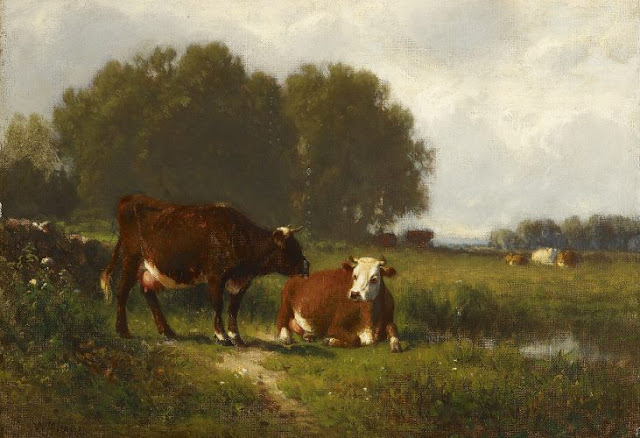
The beautiful, massive cow.  Revered in some parts of the world, Cows are seemingly gentle and domesticated cloven-hooved herbivores. The idealized paintings of these gorgeous animals are making a comeback in modern farmhouse interiors, traditional homes, pubs and old world kitchen design. The Gilded Age, biophilic design (nature, green, houseplants), environmental concerns, vintage accessories and ironically the plant-based eating movement - are all propelling cow paintings into the forefront of wall art. Plunk an ornately gold framed cow painting on your marble countertop;  leaning, not hanging and you get the idea here.  These paintings are comforting and nostalgic and make us feel relaxed as we escape into the safe, fresh-aired countryside.  Pastoral paintings of cows are, quite frankly, very calming to me. And the world needs 'calm'.  There is a definite love of cows happening!


"Cattle, taurine cattle, Eurasian cattle, or European cattle (Bos taurus or Bos primigenius taurus) are large domesticated cloven-hooved herbivores. They are a prominent modern member of the subfamily Bovinae and the most widespread species of the genus Bos. In taxonomy, adult females are referred to as cows and adult males are referred to as bulls. In colloquial speech however, cow is sometimes used as a common name for the species as a whole.

Cattle are commonly raised as livestock for meat (beef or veal, see beef cattle), for milk (see dairy cattle), and for hides, which are used to make leather. They are used as riding animals and draft animals (oxen or bullocks, which pull cartsplows and other implements). Another product of cattle is their dung, which can be used to create manure or fuel.

Around 10,500 years ago, taurine cattle were domesticated from as few as 80 progenitors in central Anatolia, the Levant and Western Iran. According to the Food and Agriculture Organization (FAO), there are approximately 1.5 billion cattle in the world as of 2018. Cattle are the main source of greenhouse gas emissions from livestock, and are responsible for around 10% of global greenhouse gas emissions. In 2009, cattle became one of the first livestock animals to have a fully mapped genome."


Next time you go on the hunt at second hand shops, keep your eye open for vintage oil paintings of lovely pastoral landscapes that feature cows.  You will be on trend. Patti xo 


All cow images in this post are sourced from Bing.


COPYRIGHT 2007-2022 Patti Friday b.1959. All photographs, works of art and words are original content, unless specified otherwise. All rights reserved. Patti Friday: Reporting from inside 'The Art Dept.' at the international 'Embassy of Ideas' I am an Artist who carries a paintbrush, camera and notebook. Instagram: @pattifriday