Showing posts with label Emergency. Show all posts

Saturday, February 29, 2020

Social Distancing and Coronavirus COVID-19


Social distancing is a term applied to certain actions that are taken by Public Health officials to stop or slow down the spread of a highly contagious disease. A Health Officer or department has the legal authority to carry out social distancing measures.  We don't need government officials to mandate this.  We can choose to distance ourselves socially in order to protect ourselves and our family.

In a nutshell it is a proactive non-pharmaceutical infection control action.


The objective of social distancing is to reduce the probability of contact between persons carrying an infection, and others who are not infected, so as to minimize disease transmission, morbidity and ultimately, mortality.


Social distancing is most effective when the infection can be transmitted via droplet contact (coughing or sneezing). 


Some examples of social distancing used to control the spread of contagious illnesses include:
  • school closure (proactive or reactive)
  • workplace closure including closure of “non-essential” businesses and social services. “Non-essential” means those facilities that do not maintain primary functions in the community, as opposed to essential services.
  • isolation (health care)
  • quarantine
  • cordon sanitaire*
  • protective sequestration
  • cancellation of mass gatherings such as sports events, films or musical shows.
  • shutting down or limiting mass transit
  • closure of recreational facilities (community swimming pools, youth clubs, gymnasiums).
  • "self-shielding" measures for individuals include limiting face-to-face contacts, conducting business by phone or online, avoiding public places and reducing unnecessary travel. The "elbow bump" and the "Dracula sneeze" are additional measures to reduce direct person-to-person transmission of microorganisms.


School closures

School closures were shown to reduce morbidity from the Asian Flu by 90% during the 1957-58 outbreak, and up to 50% in controlling influenza in the US, 2004-2008. Similarly, mandatory school closures and other social distancing measures were associated with a 29% to 37% reduction in influenza transmission rates during the 2009 flu epidemic in Mexico.


Fact*:
In January 2020, a cordon sanitaire was drawn around the Chinese city of Wuhan, known as the Wuhan lockdown, in response to an outbreak of coronavirus. As the outbreak expanded, travel restrictions impacted over half of the Chinese population, creating what may be the largest cordon sanitaire in history.


I am an Artist who carries a paintbrush, camera and notebook. Instagram: @pattifriday

Wednesday, February 26, 2020

Prepping Your Home for Coronavirus COVID-19


I want to make this post leaning towards the humorous side of things.  Although if I die from COVID-19 it probably won't be too funny after all.  My family will grieve and say things through snot like: 'But she had enough disinfectant spray, chicken noodle soup mixes, canned icing and flakies.  What went wrong?'.

Look, I'm like you I suppose.  I don't know if I truly trust what we are hearing.  Is there a fear of creating panic around the world by leaders who are remaining blase about the impending doom? I mean if there was a group Oscar award for medical officials acting calm, they'd win.  Is the stock market and the economy more important than transparency and truth?  At times I feel obsessive and neurotic and full of (unnecessary?) worry.  Hey, they don't call me 'Safety Patrol' for nothing!

The man who lives in the big white house maintains this virus is no worse than the common cold.  Okay. So why are countries shuttering their public spaces and asking families to stay home?

I like to think that I am informed and smart enough to listen to scientific experts on this health topic.  In doing so I woke up this morning and checked our provincial website which is updated daily at 10:30 am.  Then I decided. Well. Why not make a list of things we might want to have on hand should the government ask me to stay home for a few weeks?  I'm sharing my list here with you today!

Also.  Just slightly off topic. How the heck can they build a hospital in China for 1000 patients in 7 days. And why are they busy building 19 more?


Avoid kissing and hugging too much!
Wash your hands a lot.
Cough or sneeze into arm. (Duh. Now we have laundry to do!)
Stay 3 feet away from others. (good way to avoid kissing and hugging)
Clean all hard surfaces with germ killing cleaner.
Don't take it personally if others call you a fanatical germaphobe!

Watch or listen to the news but only digest items from medical experts!


Here is my list:

To alleviate cabin fever and chaos:

Streaming services (until we lose electricity)
A wind up radio, flashlight, phone charger
Batteries
Books
First aid kit
Body care items
Female items
Duct tape x 10
Plastic drop sheets
Water
Craft & Art supplies
Musical instruments
Camera
Paper plates
Notebook
Pens Pencils
Candles
Matches Lighters
Diapers if required
Baby formula
Baby food
Toilet paper
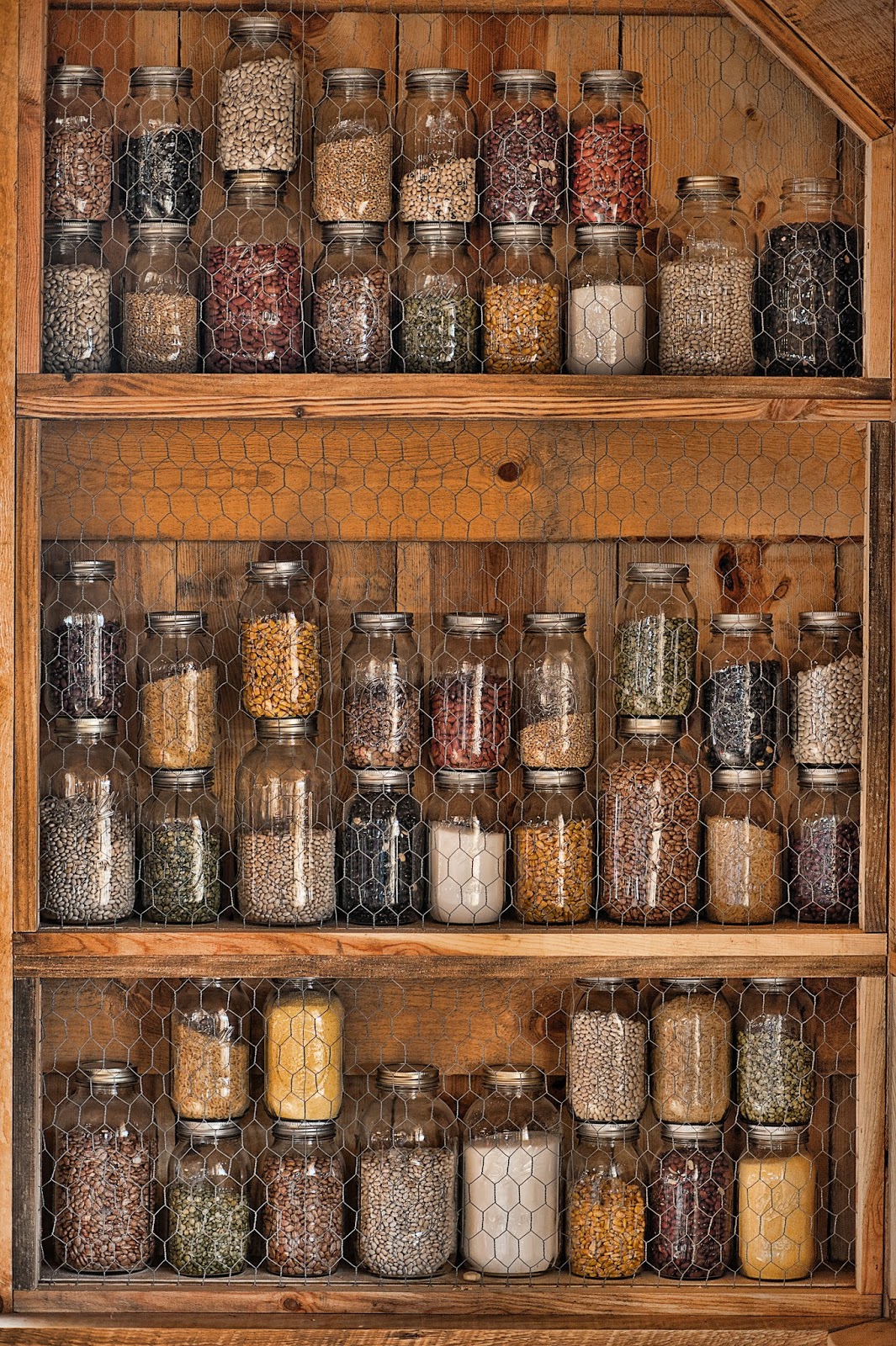
Pantry dry goods
Canned food
Several can openers
Coffee Tea
Supplements
Meal Replacement Shakes
Cleaning products
Medicines
Hand Sanitizer


Other things to consider:

Have a family planning meeting to discuss this situation
Create an emergency contact list
Start a local community Facebook group for resources, helping one another.
Select a quarantine room for those family members who are not feeling well


For those who want to learn more from a comprehensive (not scary at all eeeee) website:
'The Prepper'

Home checklist summary:


Finally, if you’re worried about the outbreak or feel unprepared, this guide is for you.

News:
Canadians advised to prepare
Government of Canada Coronavirus site
WHO World Health Organization

12 Tips for Stocking an Emergency Food Pantry


I am an Artist who carries a paintbrush, camera and notebook. Instagram: @pattifriday