Showing posts with label Art History. Show all posts

Thursday, December 26, 2024

Lee Krasner: Abstract Expressionist All-over Painter


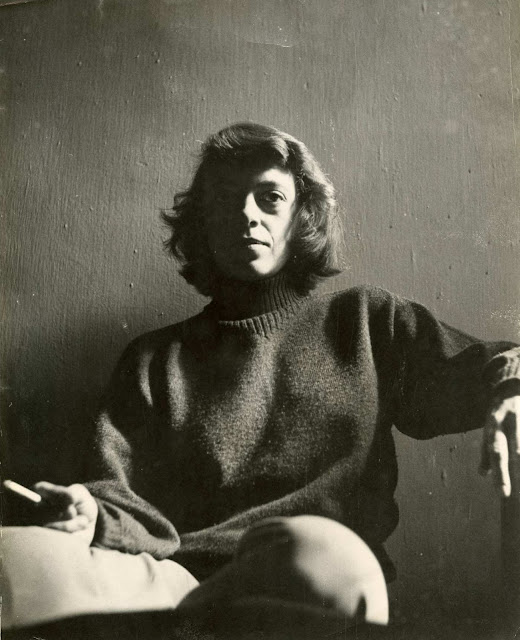
Lee Krasner (1908–1984)

Lee Krasner was an influential American artist and a leading figure in the Abstract Expressionist movement. Over her six-decade career, she created a dynamic body of work marked by constant reinvention and experimentation. Though often overshadowed during her lifetime by her husband, Jackson Pollock, Krasner’s art has gained significant recognition for its originality, emotional depth, and formal innovation.


Early Life and Education

  • Birth and Background: Born Lena Krassner in Brooklyn, New York, to Orthodox Jewish immigrants from Ukraine, Krasner showed an early interest in art.
  • Art Training: She studied at several prestigious institutions:
    • The Cooper Union and National Academy of Design (classical training).
    • Later attended Hans Hofmann's School of Fine Arts, where she learned modernist principles, including Cubism and abstraction.

Career Highlights

Early Work

  • Krasner initially worked on mural projects for the Works Progress Administration (WPA) during the Great Depression, which honed her skills in large-scale composition.
  • Influenced by Cubism and early modernist movements, she transitioned from figurative art to abstraction.

Abstract Expressionism

  • Little Image Series (1946–1950): Dense, intricate works resembling hieroglyphic writing or mosaics, showcasing her interest in structure and rhythm.
  • Collages (1950s): Krasner began incorporating pieces of her own earlier drawings and works into collages, demonstrating her ability to transform past creations into new compositions.
  • Gestural Abstraction: Works like The Seasons (1957) and Gaea (1966) reveal her bold brushwork and sensitivity to color, expressing themes of regeneration and vitality.

Late Career

  • Following Pollock's death in 1956, Krasner shifted to larger canvases and bolder colors, producing some of her most celebrated works.
  • Her monumental paintings from the 1960s and 1970s explore organic forms and luminous palettes, often inspired by nature and her emotional landscape.


Artistic Style and Legacy

Krasner’s art is defined by its variety and vitality:

  • Constant Reinvention: Krasner refused to be confined to one style, embracing collage, large-scale painting, and drawing with equal enthusiasm.
  • Dynamic Composition: Her works are marked by rhythmic energy, vibrant color, and gestural brushstrokes.
  • Integration of Nature: Organic, plant-like forms often appear in her paintings, reflecting her fascination with growth and life cycles.

Influence and Recognition

  • Krasner was a pioneer among women in a male-dominated art world. Though her contributions were initially overlooked, she is now celebrated as a trailblazer of Abstract Expressionism.
  • Major retrospectives of her work, including those at the Museum of Modern Art (MoMA) and Barbican Art Gallery, have cemented her place in art history.

Personal Life

  • Marriage to Jackson Pollock: Krasner and Pollock married in 1945. Their relationship was tumultuous but artistically significant, as they influenced each other’s work.
  • Resilience: After Pollock’s death, Krasner continued to evolve as an artist, maintaining her independence and creativity.

Notable Works

  1. Untitled (1949, Little Image Series)
  2. The Seasons (1957)
  3. Gaea (1966)
  4. Pollination (1968)

Legacy

Krasner’s work remains an enduring testament to her creative resilience and innovative spirit. She not only helped shape Abstract Expressionism but also paved the way for future generations of women artists. Her ability to adapt and transform her art speaks to her profound understanding of modernist principles and her desire to continuously challenge herself.


All-over Painting

All-over painting by Lee Krasner, an important figure in the Abstract Expressionist movement, refers to her works characterized by a dense, non-hierarchical application of paint across the entire canvas. This technique avoids a single focal point, instead creating a uniform visual impact that engages the viewer's eye with dynamic, rhythmic energy across the surface.

Key Features:

  • Dense Composition: Krasner often filled the canvas edge to edge with bold colors, lines, and shapes.
  • Organic Movement: Her brushstrokes frequently have a gestural, organic quality, evoking motion and vitality.
  • Layering: She incorporated layers of paint to build texture and depth.
  • Interwoven Forms: Krasner’s works feature interconnected forms that seem to grow and pulse across the canvas, reflecting her intuitive process.

Context:

Krasner's all-over style developed in part from her studies with Hans Hofmann, as well as her exploration of Jackson Pollock’s drip painting techniques (Pollock was her husband). However, her style remained distinct, often inflected with her interest in natural forms, color, and collage.

Notable examples of this approach include works from her "Little Image" series of the late 1940s and later pieces like "The Seasons" (1957), which display her mastery of creating vibrant, immersive compositions.

Lee Krasner and the "Ninth Street Women"

The "Ninth Street Women" is a term that refers to a group of pioneering women artists who played significant roles in shaping Abstract Expressionism, the first major modern art movement to emerge from the United States. These women challenged the male-dominated art world of mid-20th century New York and created groundbreaking work that continues to influence art today. The term gained prominence after the publication of Mary Gabriel's book Ninth Street Women: Lee Krasner, Elaine de Kooning, Grace Hartigan, Joan Mitchell, and Helen Frankenthaler (2018).


Lee Krasner's Role

Central to Abstract Expressionism

Lee Krasner was a key member of this group, both as an artist and as a connective force in the art world. Known for her relentless reinvention and dynamic works, she was deeply embedded in the avant-garde scene, contributing her unique voice to Abstract Expressionism. Her association with the "Ninth Street Women" highlights her influence and camaraderie with other women artists striving for recognition.

Ninth Street Show (1951)

The group’s name derives from the historic Ninth Street Show of 1951, organized by art dealer Leo Castelli and The Club, a gathering of Abstract Expressionist artists. The show took place in a building at 60 East 9th Street in Manhattan and included work by both male and female artists. Krasner’s inclusion in this landmark exhibition underscored her importance within the movement, despite the gender biases of the time.


Key Relationships and Contributions

  1. Elaine de Kooning

    • Like Krasner, Elaine navigated the challenges of being married to a prominent artist (Willem de Kooning) while carving out her own identity as a painter and writer. Elaine admired Krasner’s strength and her ability to advocate for her work.
  2. Grace Hartigan

    • Known for blending abstraction with figuration, Hartigan shared Krasner’s resilience in asserting her place in a male-dominated art scene. The two women pushed boundaries in their exploration of color and gesture.
  3. Joan Mitchell

    • Mitchell, who emerged slightly later, was influenced by the earlier pioneers like Krasner. Both artists shared a deep connection to nature and created works characterized by expressive, sweeping gestures.
  4. Helen Frankenthaler

    • Frankenthaler’s pioneering "soak-stain" technique paralleled Krasner’s experimental approach to abstraction. Both artists emphasized color and process, though their styles were distinct.

Challenges Faced by the "Ninth Street Women"

Despite their talent and contributions, these women faced significant obstacles:

  • Gender Bias: The art world, critics, and even peers often overlooked or dismissed their work.
  • Marital Dynamics: Several of the women were married to famous male artists, and their identities were sometimes subsumed under their husbands’ reputations. For example, Krasner was frequently overshadowed by her husband, Jackson Pollock, even though she had an independent and evolving career.
  • Financial Struggles: Like many artists, they faced challenges in securing gallery representation and sales early in their careers.

Krasner's Enduring Legacy

Krasner stands out among the "Ninth Street Women" for her fierce independence and dedication to her craft:

  • Reinvention: She constantly experimented, moving from her Little Image series to bold, gestural abstractions, and later to collages and large-scale paintings.
  • Mentorship: Krasner supported and inspired other women artists, proving that their voices belonged in the art world.
  • Recognition: Though initially overshadowed, she achieved posthumous acclaim, with major retrospectives and increasing acknowledgment of her role in Abstract Expressionism.

Why the Ninth Street Women Matter

The "Ninth Street Women," including Krasner, were trailblazers who broke barriers for women in the art world. Their perseverance, innovation, and camaraderie demonstrated that women could—and did—create work as powerful and transformative as their male counterparts. Today, they are celebrated not just as great women artists, but as great artists, period.


COPYRIGHT 2007-2024 Patti Friday b.1959.

Tuesday, December 24, 2024

Joan Mitchell: American Abstract Painter and Dog Lover

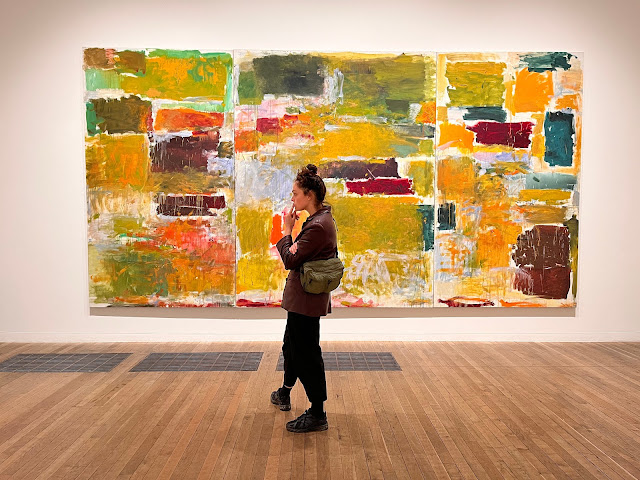
Joan Mitchell, an extraordinary figure in 20th-century art, remains one of the most celebrated painters of the Abstract Expressionist movement. Born on February 12, 1925, in Chicago, Illinois, she grew to redefine abstraction, blending emotional intensity with lyrical beauty. Her work, characterized by dynamic brushstrokes, vivid colors, and profound emotional depth, established her as a towering presence in a predominantly male art world. Beyond her technical prowess, Mitchell’s life and career are testaments to resilience, innovation, and the transformative power of art.

Celebrating Mitchell’s Centennial in 2025

Joan Mitchell was born February 12, 1925, and her impact on the art world continues to resonate over 30 years after her death in 1992. The Joan Mitchell Foundation will commemorate Mitchell’s centennial throughout 2025 with a robust series of programs and events—anchored by presentations of her work in museums around the world—in collaboration with museum partners in the United States and France, where Mitchell lived for much of her life. The Foundation will also significantly expand the information about Mitchell’s life and creative context made available through its own website and social media, including digitally releasing a documentary film on Mitchell that has been unavailable for many years. Together, these activities will give a wide range of audiences an opportunity to experience her work and learn more about her life, career, and enduring influence.

“The centennial is an important occasion both to honor Joan Mitchell’s creative process and remarkable contributions to abstract painting, and to foster a deeper understanding of her lasting legacy and, especially, her support for other artists,” said Christa Blatchford, Executive Director of the Joan Mitchell Foundation. “Throughout the centennial year programs, we will be highlighting Mitchell’s vital role in art history, which continues to inspire new interpretations, contrasts, and points of comparison that underscore her unique vision. At the same time, this year of programming and related announcements will spotlight the artists and communities whose work and creativity Mitchell generously supported during her lifetime and, through this Foundation, after her death.”


Early Life and Education

Joan Mitchell was born into a well-to-do family, with a poet mother, Marion Strobel, and a doctor father, James Herbert Mitchell. Raised in an environment steeped in culture and intellect, Mitchell developed a keen appreciation for art and literature early on. Her artistic journey began in earnest at the Art Institute of Chicago, where she earned her Bachelor of Fine Arts degree in 1947. She later moved to New York City, immersing herself in the burgeoning post-war art scene and pursuing advanced studies at Columbia University.


Mitchell’s formative years were marked by her exposure to various artistic movements and her determination to forge her path. Influenced by the works of Paul Cézanne, Wassily Kandinsky, and Vincent van Gogh, she absorbed lessons from both European and American traditions. However, Mitchell’s unique voice quickly emerged, shaped by her intuition and her visceral responses to the natural world.


Career and Artistic Evolution

Mitchell’s arrival in New York coincided with the rise of Abstract Expressionism, a movement dominated by figures like Jackson Pollock, Willem de Kooning, and Mark Rothko. While she shared their interest in abstraction and spontaneity, her approach was distinctly her own. Mitchell’s paintings often reflected her deep connection to landscapes and nature, translating the beauty and chaos of the natural world into vibrant, gestural works.


Her early works, such as Untitled (1951) and City Landscape (1955), exhibit a dynamic interplay of color and form, evoking the energy of urban and natural environments. These paintings reveal her mastery of composition and her ability to balance intensity with lyricism. Unlike some of her contemporaries who pursued pure abstraction, Mitchell’s work retained a sense of place, often inspired by specific memories or scenes.


By the late 1950s, Mitchell had gained recognition for her work, participating in major exhibitions and earning critical acclaim. She became one of the few women artists associated with the "second generation" of Abstract Expressionists. However, her success did not shield her from the challenges of being a female artist in a male-dominated field. Mitchell’s determination and unwavering commitment to her vision enabled her to transcend these barriers, forging a legacy that continues to inspire.


Life in France and Mature Work

In 1959, Joan Mitchell moved to France, initially dividing her time between Paris and the countryside before settling in Vétheuil, a village near Claude Monet’s famed Giverny. The French landscape profoundly influenced her work, providing a rich source of inspiration and a backdrop for her creative explorations.

Her mature works, such as La Grande Vallée series (1983–1984), demonstrate her evolving style. These large-scale canvases, characterized by sweeping brushstrokes and layered textures, convey a sense of emotional intensity and spatial depth. The series, inspired by a friend’s description of an idyllic place, exemplifies Mitchell’s ability to evoke profound feelings through abstraction.

Mitchell’s later works often reflect themes of memory, loss, and resilience. Paintings like River (1989) and Sunflowers (1990–1991) reveal her continued engagement with nature and her capacity to translate complex emotions into visual form. Her use of color—bold yet nuanced—creates a dynamic interplay between chaos and harmony, echoing the rhythms of life itself.


Legacy and Impact

Joan Mitchell’s contributions to art extend beyond her paintings. As a trailblazer for women in the arts, she challenged the gender norms of her time, paving the way for future generations of female artists. Her work has been celebrated in major retrospectives and continues to be exhibited in prestigious institutions worldwide.

In 1992, the Joan Mitchell Foundation was established to support contemporary artists and preserve her legacy. The foundation’s programs, which include grants, residencies, and educational initiatives, reflect Mitchell’s belief in the transformative power of art and her commitment to fostering creativity.

Mitchell’s influence can be seen in the work of contemporary artists who share her interest in abstraction, emotion, and the natural world. Her paintings, with their vibrant energy and profound depth, remain a source of inspiration and a testament to the enduring power of art.


Personal Struggles and Resilience

Despite her success, Joan Mitchell’s life was not without challenges. She faced periods of self-doubt, struggled with alcoholism, and endured personal losses. These experiences, however, often fueled her art, providing a wellspring of emotion that she channeled into her work.

Mitchell’s resilience is evident in her ability to navigate the complexities of life while remaining true to her artistic vision. Her paintings, filled with passion and vitality, reflect her indomitable spirit and her profound connection to the world around her.

Conclusion

Joan Mitchell’s life and work embody the essence of Abstract Expressionism while transcending its boundaries. Her ability to merge the emotional and the lyrical, the abstract and the tangible, sets her apart as one of the most significant artists of her time. Through her paintings, she invites viewers to experience the world anew, to see beauty in chaos, and to find meaning in abstraction.

As a pioneer, a visionary, and a relentless creator, Joan Mitchell leaves a legacy that continues to resonate. Her art, imbued with life’s complexities and wonders, serves as a reminder of the power of creativity to transform and transcend. In celebrating Joan Mitchell, we celebrate not only an artist but also a profound witness to the human experience.


Artist Dogs:

Joan Mitchell had 13 dogs!

Georges du Soleil, a black poodle, was one of Joan Mitchell's beloved canine companions. Known for her deep affection for animals, Mitchell treasured Georges as a constant presence in her life during her years in France. While many of Mitchell's dogs were a source of companionship and emotional solace, Georges du Soleil stood out as a symbol of joy and loyalty.

The poodle's name, which translates to "George of the Sun," reflects Mitchell's characteristic whimsy and her poetic connection to the natural world. Georges frequently accompanied Mitchell in her daily routines, offering a grounding and comforting presence as she immersed herself in her creative endeavors. The dog's lively personality and elegance likely resonated with Mitchell's own artistic sensibilities, providing inspiration and a sense of equilibrium in her often intense and solitary artistic life.

Mitchell's love for Georges du Soleil was emblematic of her broader connection to her dogs, who were integral to her life and work. Georges, like her other pets, was more than just a companion; he was part of the vibrant, dynamic environment that nourished her creativity and her ability to channel emotion into her art.


The 9th Street Women is a compelling account of five groundbreaking female artists—Lee Krasner, Elaine de Kooning, Grace Hartigan, Joan Mitchell, and Helen Frankenthaler—who revolutionized the Abstract Expressionist movement in mid-20th-century America. Written by Mary Gabriel, the book explores their artistic triumphs and personal struggles within a male-dominated art world. These women defied societal norms, challenged traditional gender roles, and created groundbreaking work that reshaped modern art. Set against the vibrant backdrop of postwar New York, The 9th Street Women highlights their resilience, camaraderie, and enduring influence, offering a nuanced narrative of creativity, ambition, and the fight for artistic recognition.


Joan Mitchell's artworks are featured in numerous public collections worldwide. The Museum of Modern Art (MoMA) in New York holds several of her pieces, including "Grandes Carrières" (1961–1962).Additionally, the Fondation Louis Vuitton in Paris includes works like "Cypress" (1980) and "River" (1989) in its collection. For a comprehensive list of institutions housing Mitchell's art, the Joan Mitchell Foundation provides a directory of public collections.

It's important to note that while these institutions possess significant holdings of Mitchell's work, the exact number of pieces in each collection may vary, and some works may not be on permanent display.

For those interested in viewing Mitchell's art, it's advisable to check with individual museums regarding the availability of her works for public viewing.


Four of Joan Mitchell's Abstract Masterpieces Sold for $45.2 Million at Sotheby's

COPYRIGHT 2007-2024 Patti Friday b.1959.