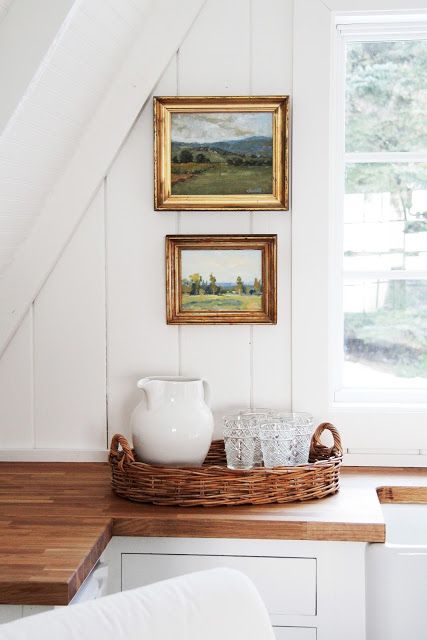
The beautiful, massive cow. Revered in some parts of the world, Cows are seemingly gentle and domesticated cloven-hooved herbivores. The idealized paintings of these gorgeous animals are making a comeback in modern farmhouse interiors, traditional homes, pubs and old world kitchen design. The Gilded Age, biophilic design (nature, green, houseplants), environmental concerns, vintage accessories and ironically the plant-based eating movement - are all propelling cow paintings into the forefront of wall art. Plunk an ornately gold framed cow painting on your marble countertop; leaning, not hanging and you get the idea here. These paintings are comforting and nostalgic and make us feel relaxed as we escape into the safe, fresh-aired countryside. Pastoral paintings of cows are, quite frankly, very calming to me. And the world needs 'calm'. There is a definite love of cows happening!
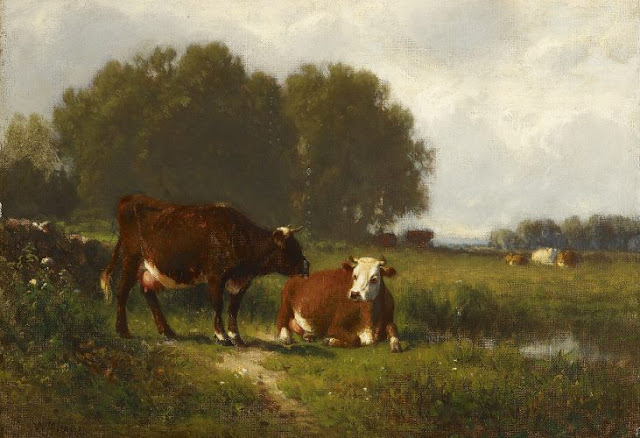
"Cattle, taurine cattle, Eurasian cattle, or European cattle (Bos taurus or Bos primigenius taurus) are large domesticated cloven-hooved herbivores. They are a prominent modern member of the subfamily Bovinae and the most widespread species of the genus Bos. In taxonomy, adult females are referred to as cows and adult males are referred to as bulls. In colloquial speech however, cow is sometimes used as a common name for the species as a whole. Cattle are commonly raised as livestock for meat (beef or veal, see beef cattle), for milk (see dairy cattle), and for hides, which are used to make leather. They are used as riding animals and draft animals (oxen or bullocks, which pull carts, plows and other implements). Another product of cattle is their dung, which can be used to create manure or fuel.
Around 10,500 years ago, taurine cattle were domesticated from as few as 80 progenitors in central Anatolia, the Levant and Western Iran. According to the Food and Agriculture Organization (FAO), there are approximately 1.5 billion cattle in the world as of 2018. Cattle are the main source of greenhouse gas emissions from livestock, and are responsible for around 10% of global greenhouse gas emissions. In 2009, cattle became one of the first livestock animals to have a fully mapped genome."
Next time you go on the hunt at second hand shops, keep your eye open for vintage oil paintings of lovely pastoral landscapes that feature cows. You will be on trend. Patti xo
All cow images in this post are sourced from Bing.
COPYRIGHT
2007-2022 Patti Friday b.1959.
All photographs, works of art and words are original content, unless specified otherwise.
All rights reserved.
Patti Friday: Reporting from inside 'The Art Dept.' at the international 'Embassy of Ideas'
I am an Artist who carries a paintbrush, camera and notebook. Instagram: @pattifriday